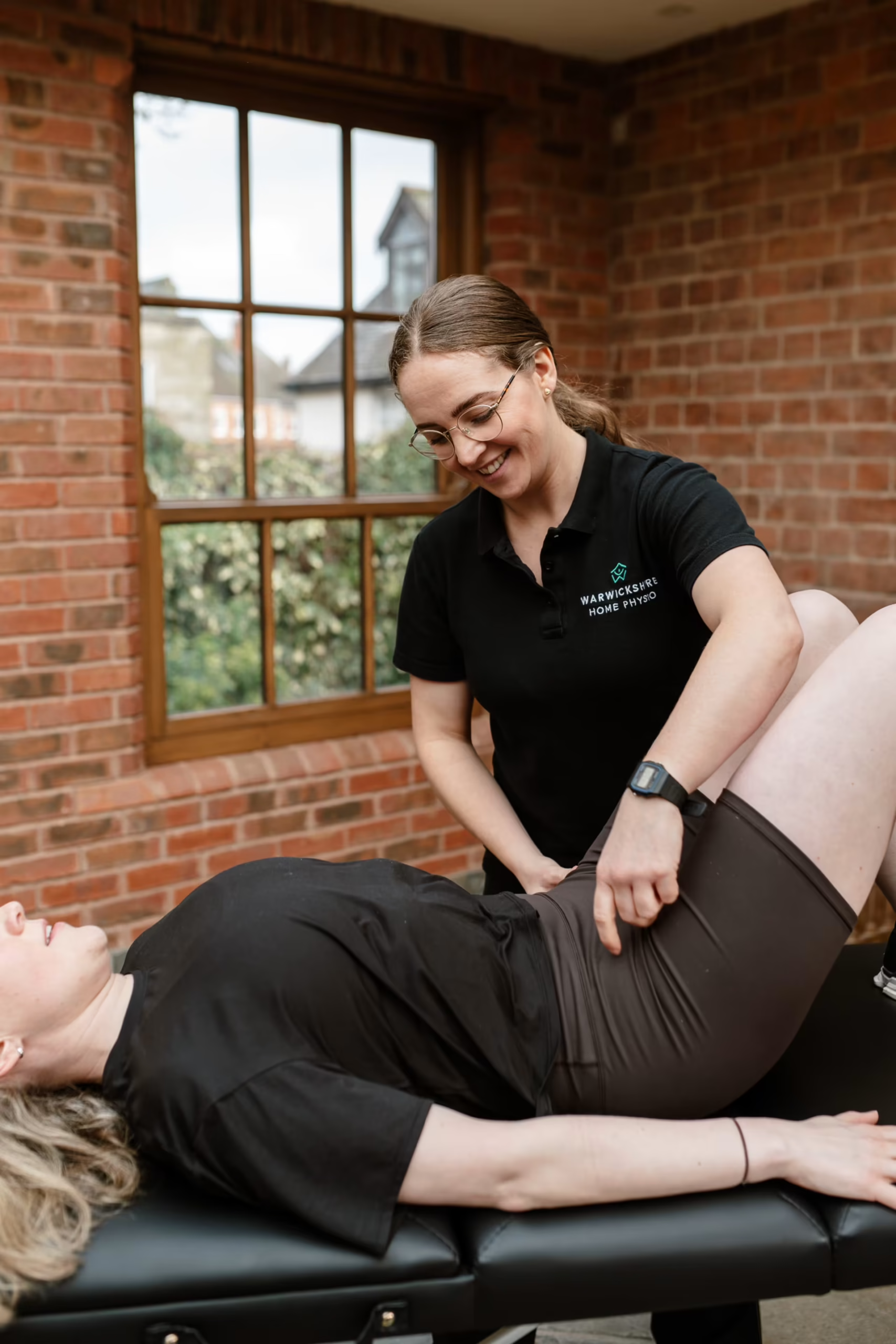
Expert Home Physiotherapy for Hip Pain
Hip pain can make walking, climbing stairs, getting in and out of a chair, and even sleeping uncomfortable. Because the hip is central to almost all movement, problems here can quickly affect your independence and quality of life. At Warwickshire Home Physio, we assess and treat hip pain in your own home, identifying the cause and providing a personalised plan to ease your symptoms and restore confident movement.
Our chartered physiotherapists are regulated by the Chartered Society of Physiotherapy and registered with the HCPC, with strong experience in managing hip pain across all ages and activity levels.
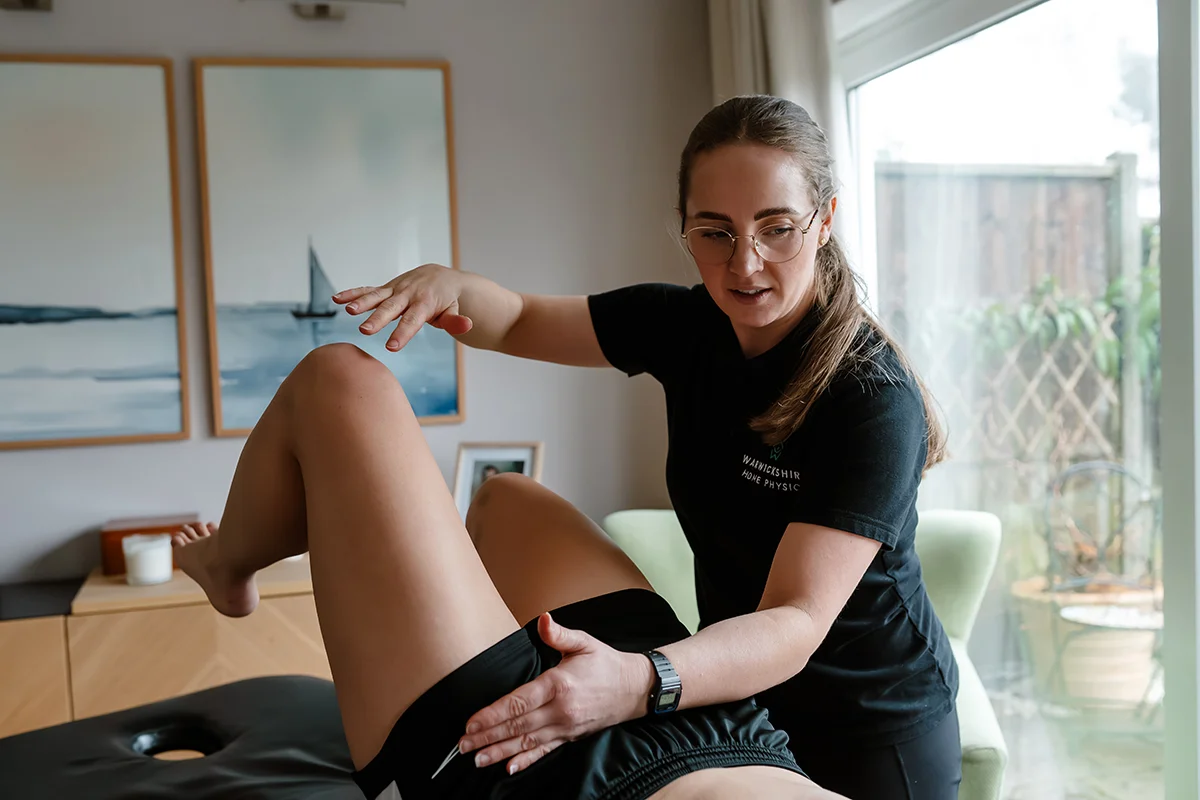

What Is Hip Pain?
Hip pain is discomfort felt in or around the hip joint, a deep and stable ball-and-socket joint that connects the thigh bone to the pelvis. It is surrounded by powerful muscles, strong tendons, and protective bursae. Pain can be felt in the groin, the outer hip, the buttock, or even refer down into the thigh or knee, and the location often gives clues about its source.
Not all pain felt around the hip actually comes from the hip joint itself. It can arise from the surrounding soft tissues or be referred from the lower back. A skilful assessment is therefore essential to distinguish between these and to target treatment where it will make the most difference.
Common Symptoms
- Pain in the groin or front of the hip, particularly when walking or weight-bearing
- Pain on the outer side of the hip, often tender to lie on at night
- Stiffness and reduced movement, especially first thing in the morning or after sitting
- Difficulty with stairs, getting up from low chairs, or putting on shoes and socks
- A deep ache in the buttock or a feeling of the hip catching
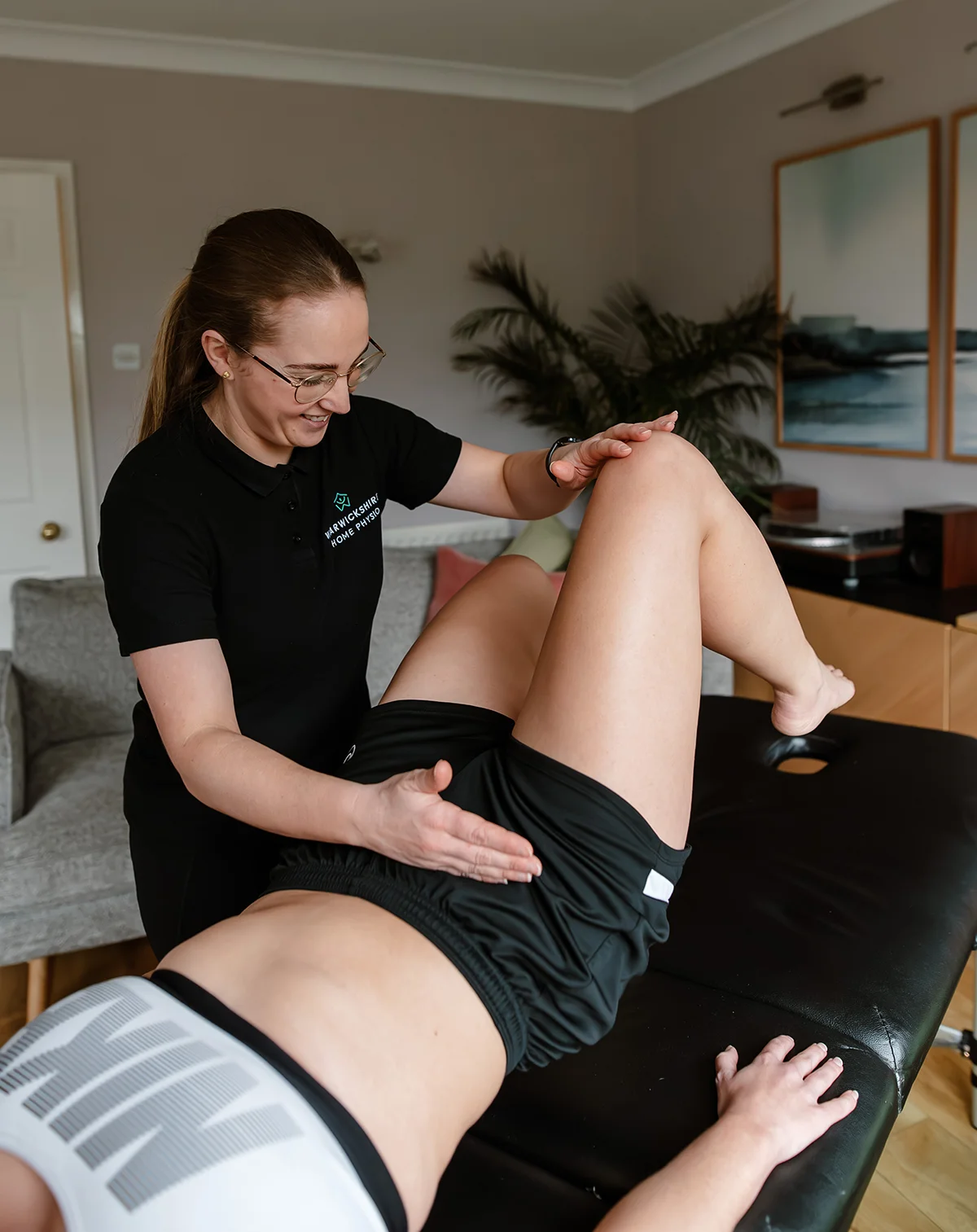
Common Causes of Hip Pain
Hip pain can stem from the joint, the surrounding soft tissues, or the lower back. Identifying the true source is central to effective treatment and realistic goal setting.
- Osteoarthritis of the hip, a common cause of groin pain and stiffness, especially with age
- Gluteal tendinopathy or bursitis, leading to pain and tenderness on the outer hip, which is known as “greater trochanteric pain syndrome”
- Muscle and tendon strains around the hip and pelvis
- Hip impingement or labral issues, which can cause groin pain and catching
- Pain referred from the lower back or sacroiliac region of the pelvis
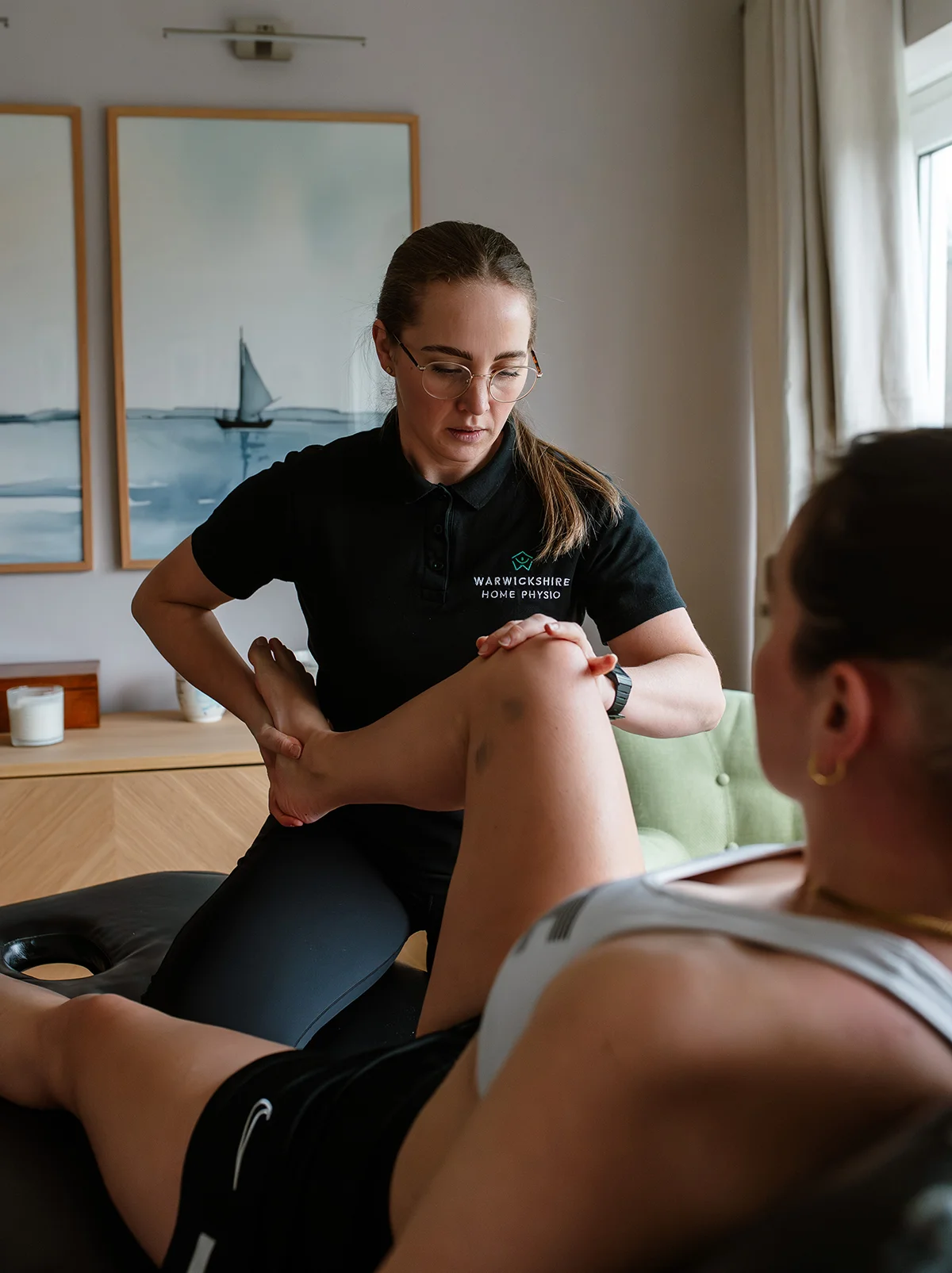
How Home Physiotherapy Helps Hip Pain
Physiotherapy is a first-line treatment for the majority of hip problems, including osteoarthritis and gluteal tendinopathy. Strengthening the muscles around the hip and pelvis, improving movement, and managing load are all well-evidenced ways to reduce pain and improve function.
Through our home physiotherapy service, we treat your hip pain in the environment where it most affects you, observing how you walk, rise from chairs, and manage stairs at home. Your programme will combine targeted strengthening and movement work with practical advice on positioning, sleeping, and daily activity, alongside hands-on treatment where it helps.
Where hip pain is connected to running, sport, or a return to higher-level activity, our sports rehabilitation knowledge supports a safe and progressive return. Explore our sports injury rehab service page for more on activity-related hip pain.
What to Expect From Your Assessment
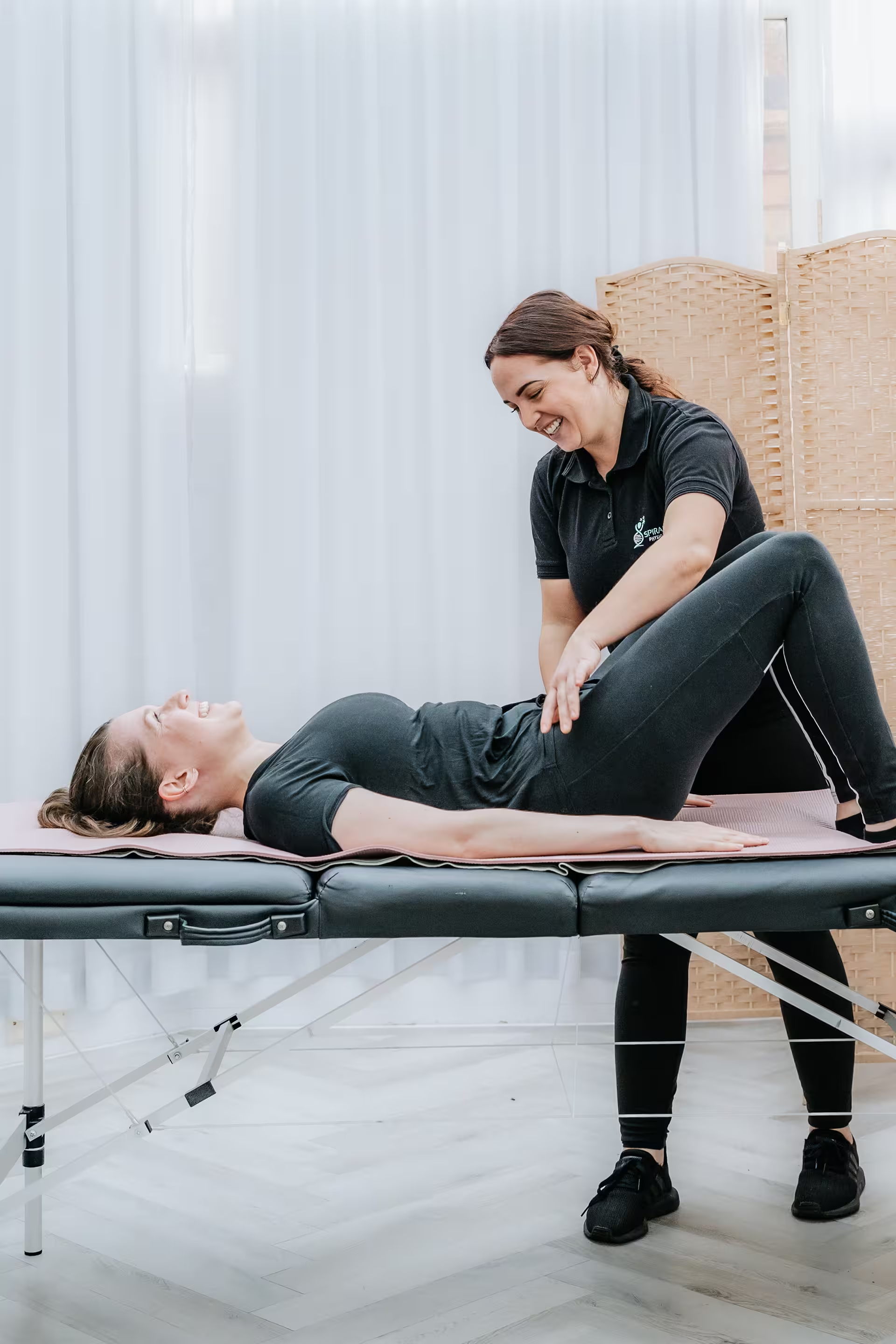
Your first appointment starts with a detailed conversation about your hip pain, including where you feel it, what makes it worse, and how it affects your daily routine and sleep. We then assess the hip hands-on, examining its movement and strength, and checking the lower back, pelvis and lower limbs, as these can contribute to hip symptoms.
We explain our findings clearly and agree a personalised plan with you. You will usually begin some tailored exercises straight away and leave with practical advice you can use immediately. As your hip improves, we progress your programme and keep checking in on your goals.