Expert Home Physiotherapy for Shoulder Pain
The shoulder is the most mobile joint in the body, and when it hurts, even simple tasks like dressing, reaching a shelf, or sleeping on your side can become a struggle. At Warwickshire Home Physio, we assess and treat shoulder pain in your own home, identifying the source of the problem and building a personalised programme to restore strength, movement, and comfort.
Our chartered physiotherapists are regulated by the Chartered Society of Physiotherapy and registered with the HCPC, with particular experience in diagnosing and treating the full range of shoulder conditions.

What Is Shoulder Pain?
Shoulder pain is discomfort felt in or around the shoulder joint or arm, which is actually a complex of joints, muscles, and tendons working together. The main joint is a shallow ball-and-socket that allows enormous range of movement, but this design also makes the shoulder reliant on the surrounding rotator cuff muscles and tendons for stability. Many shoulder problems heavily involve these soft tissues rather than the joint itself.
Because the shoulder is so intricate, accurate diagnosis matters. Pain may come from the tendons, the joint surfaces, the surrounding bursa, or even be referred from the neck. A thorough and skilful assessment allows us to pinpoint the cause and direct treatment precisely, which is key to a good recovery.
Common Symptoms
- Pain when lifting the arm, reaching overhead, or moving it behind your back
- Difficulty sleeping on the affected side
- Weakness when lifting or carrying
- Stiffness or a gradual loss of movement in the joint
- Clicking, catching, or a painful arc of movement at certain angles
Common Causes of Shoulder Pain
Shoulder pain has many possible causes. Establishing which structures are involved guides the most effective treatment approach.
- Rotator cuff problems, most commonly tendinopathy
- Shoulder “impingement” where pain is felt during overhead movements – though this is an outdated term, we prefer subacromial pain syndrome or cuff-related shoulder pain
- Frozen shoulder or “adhesive capsulitis”, a condition causing progressive stiffness and pain of the shoulder capsule
- Osteoarthritis of the shoulder joint, leading to pain and reduced movement
- Injuries from falls, sport, or sudden overload, as well as pain referred from the neck
How Home Physiotherapy Helps Shoulder Pain
Physiotherapy is a first-line treatment for most shoulder conditions, and research strongly supports exercise-based rehabilitation for problems such as rotator cuff pain. The aim is to reduce pain, restore range of movement, and rebuild the strength and control the shoulder needs to function well.
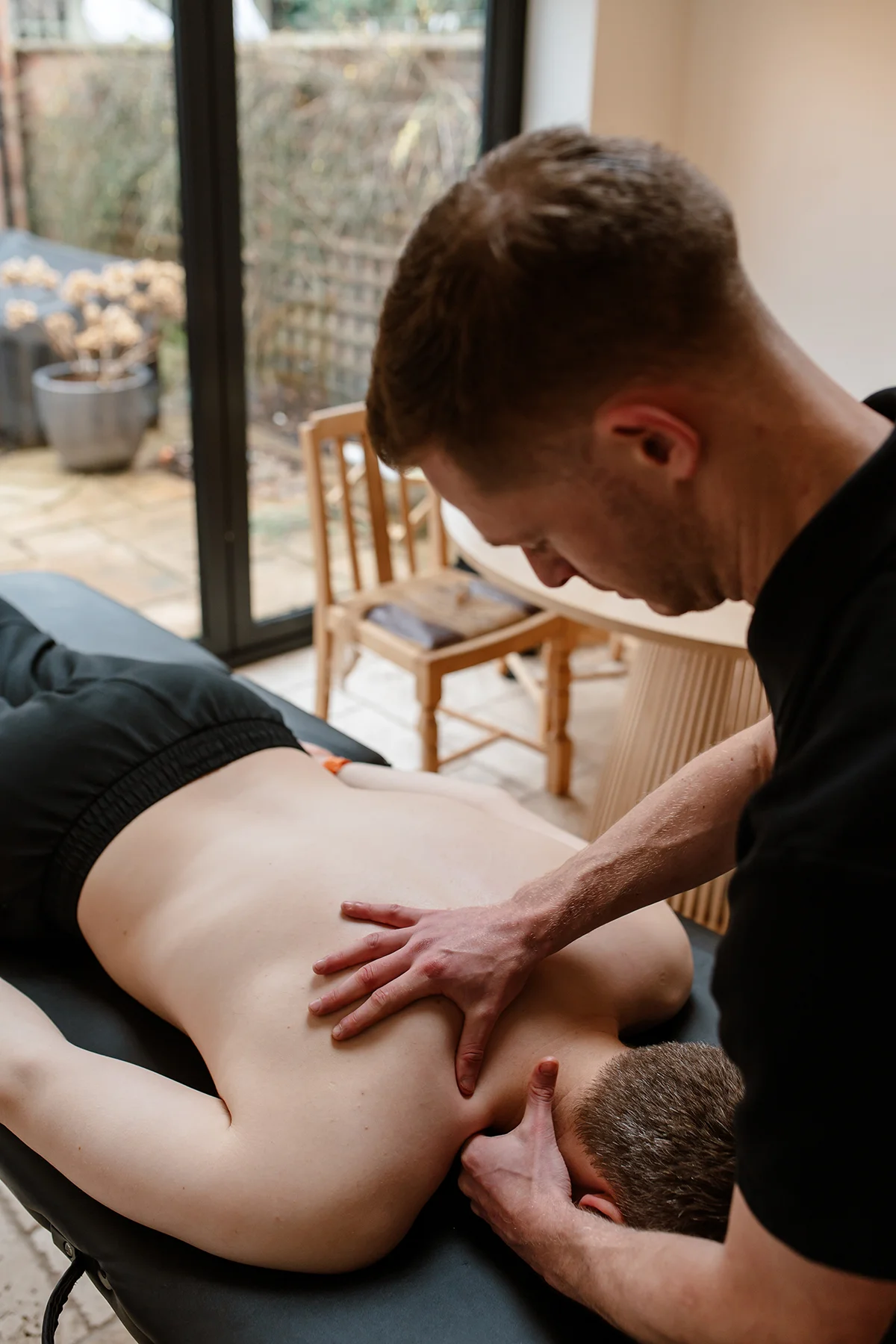
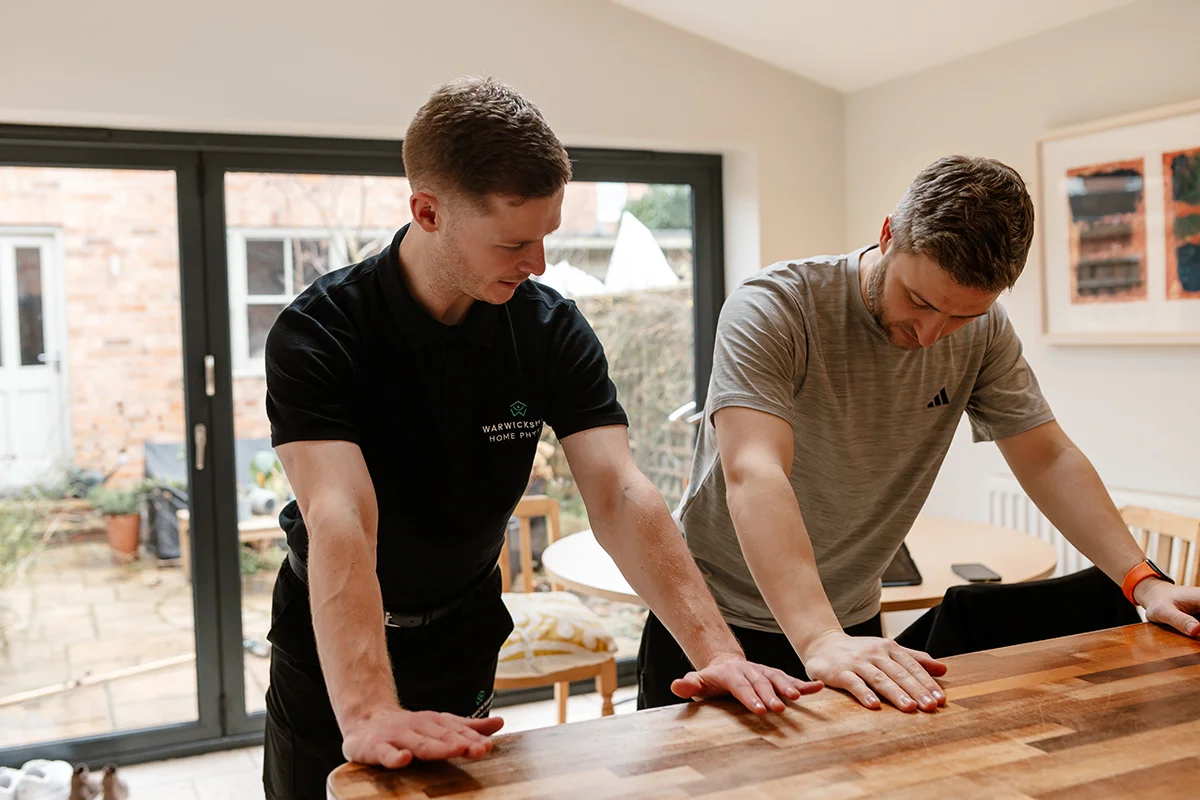
Through our home physiotherapy service, we bring assessment and treatment directly to you, which is especially valuable when reaching, carrying, and even getting dressed are painful. Your programme will typically combine education, hands-on techniques, and a progressive, individualised exercise plan to strengthen the rotator cuff and surrounding muscles.
If your shoulder pain stems from sport or you are working towards a return to training, our sports rehabilitation expertise helps guide a safe and structured comeback. Explore our sports injury rehab service page for sport-related shoulder injuries.
What to Expect From Your Assessment
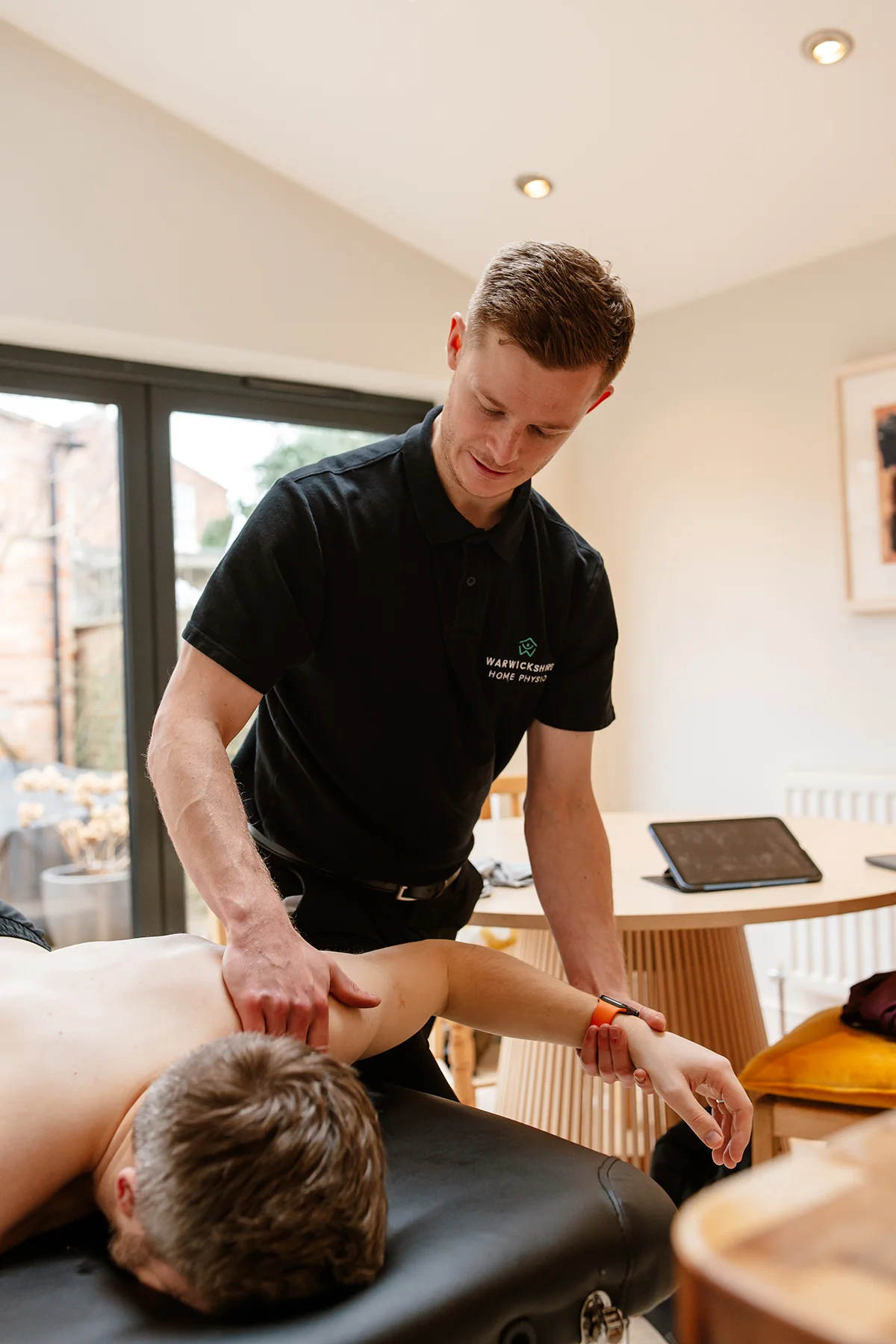
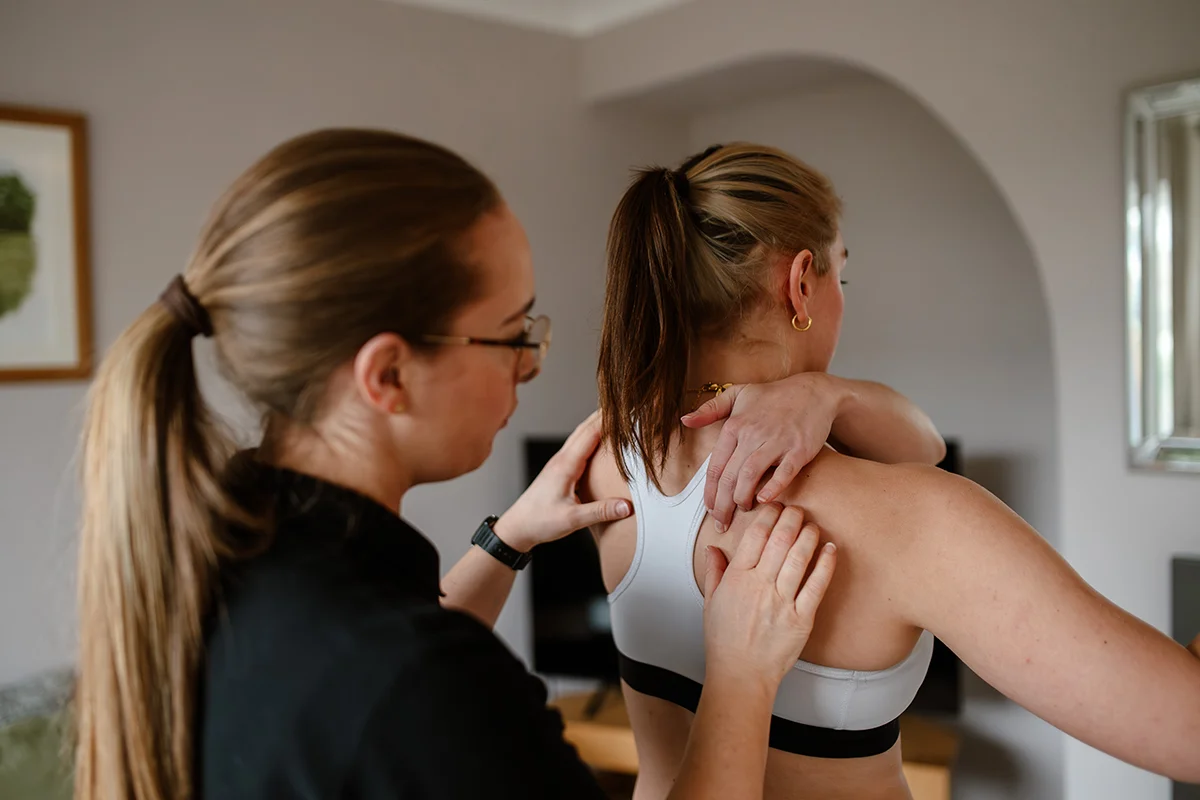
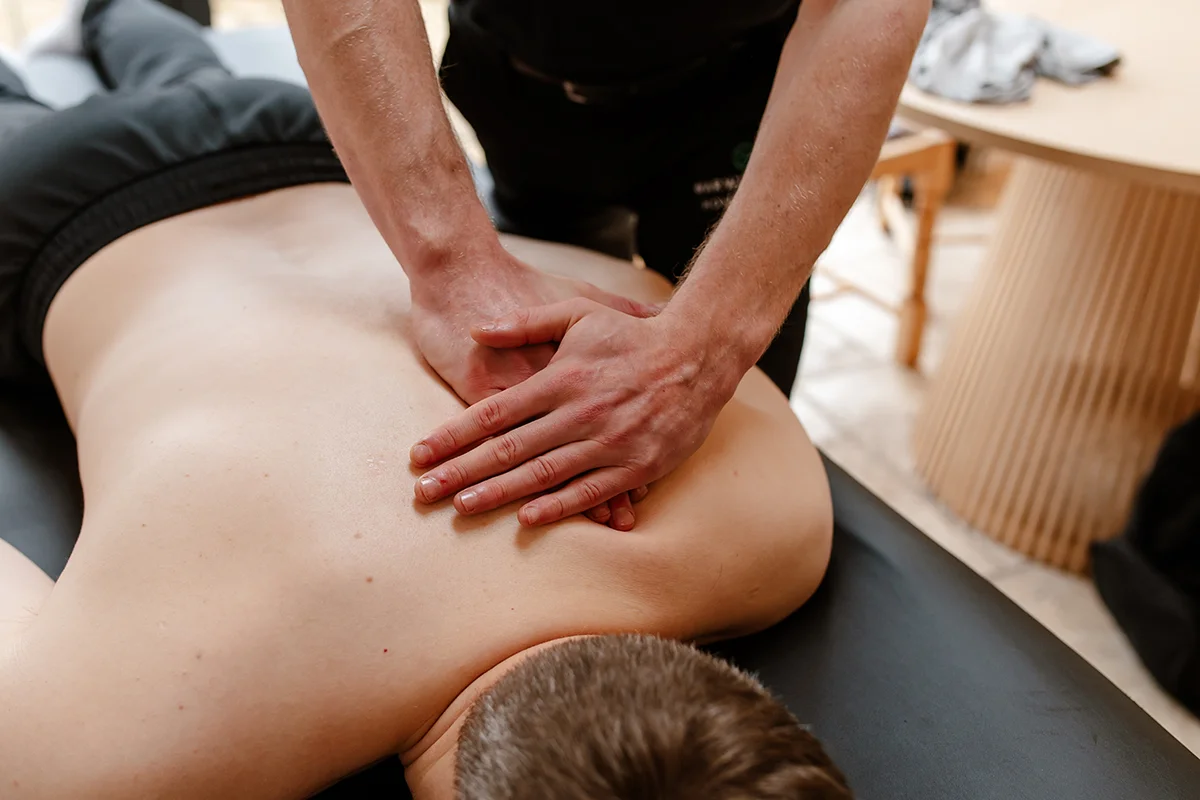
Your first visit involves a detailed discussion of your symptoms, how they started, and how they affect your daily life and sleep. We then carry out a hands-on assessment of your shoulder, testing its movement and strength, and examining the neck and the rest of the upper limb.
We explain our findings in clear terms and agree a personalised plan with you. You will normally begin a few tailored exercises straight away and leave with a realistic understanding of your condition and recovery timeline. Some shoulder conditions take time to resolve, so we keep your programme progressing and supported at every stage.