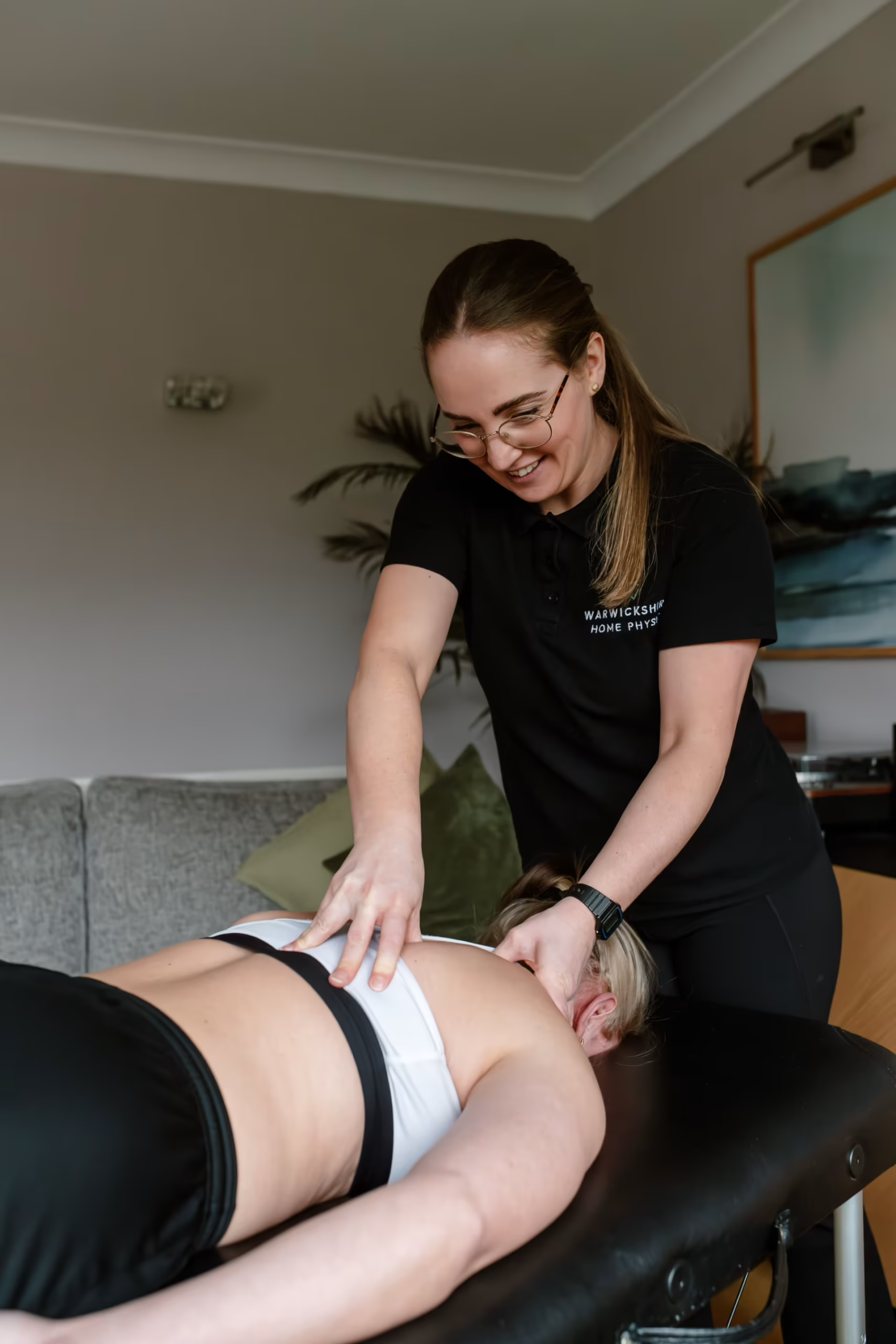
Expert Home Physiotherapy for Back Pain
Back pain is one of the most common reasons people seek physiotherapy, and it can affect almost anything you do, from getting out of bed, to your work duties, and can significantly impact family life. At Warwickshire Home Physio, we assess and treat back pain in the comfort of your own home, identifying the root cause of your symptoms and building a clear plan to settle the pain and get you moving confidently again. There is no waiting room and no travel, just professional care brought directly to you.
Our chartered physiotherapists are regulated by the Chartered Society of Physiotherapy and registered with the HCPC, so you can feel confident you are in safe, qualified hands from your very first session./
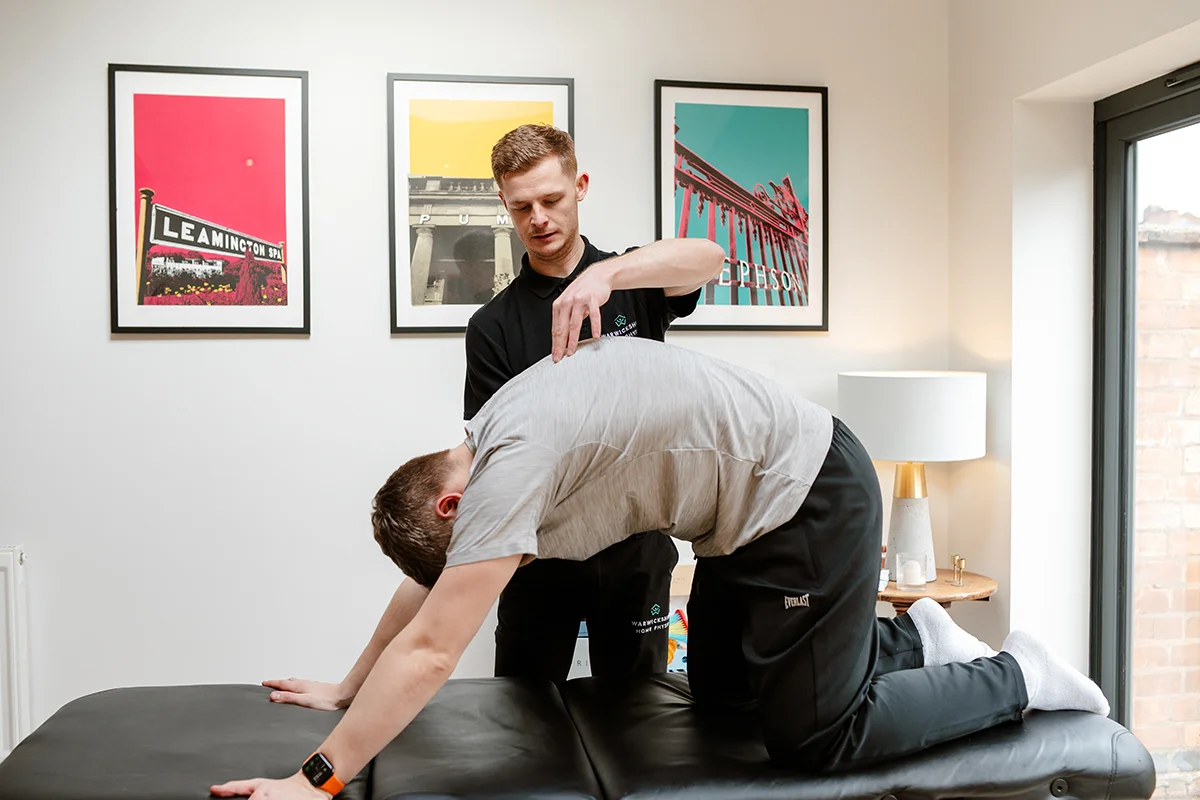

What Is Back Pain?
Back pain describes any discomfort felt along the spine, from the base of the neck down to the lower back and pelvis. Most cases involve the lower back, an area known as the lumbar spine, which carries much of the body’s load and is heavily involved in bending, lifting, and twisting. Pain can be sharp, dull, burning, or stiff, and it may stay in one place or spread into the buttock or leg.
The reassuring news is that the vast majority of back pain is not caused by anything serious or permanent. It is usually related to how the muscles, joints, and discs of the spine are moving and loading, all of which respond very well to the right modifications, exercise and hands-on treatment. Understanding exactly what is driving your pain is the first step towards recovery, which starts with a skilful and holistic assessment.
Common Symptoms
- An ache, stiffness, or tightness across the lower back, often worse first thing in the morning or after sitting
- Sharp or catching pain when bending, lifting, or changing position
- Muscle spasm or a feeling that the back has locked up
- Difficulty standing up straight or moving as freely as usual
- Discomfort that eases when you change position or move gently
- “Episodes” where the pain is very intense for days/weeks then disappears entirely
Common Causes of Back Pain
Back pain rarely has a single cause. More often it builds from a combination of everyday factors that gradually overload the spine and the muscles that support it. Pinpointing the contributing factors is central to lasting relief, which is exactly what a thorough, holisitic assessment is designed to do.
- Non-specific mechanical strain from lifting, bending awkwardly, or a sudden unguarded movement
- Prolonged sitting or poor positioning, particularly for people who work at a desk for long hours
- Periods of reduced activity, which leave the supporting muscles deconditioned and less able to cope with load
- Age-related changes in the discs and joints of the spine, which are extremely common and usually harmless
- Stress, poor sleep, and low mood, all of which influence how the body perceives and manages pain
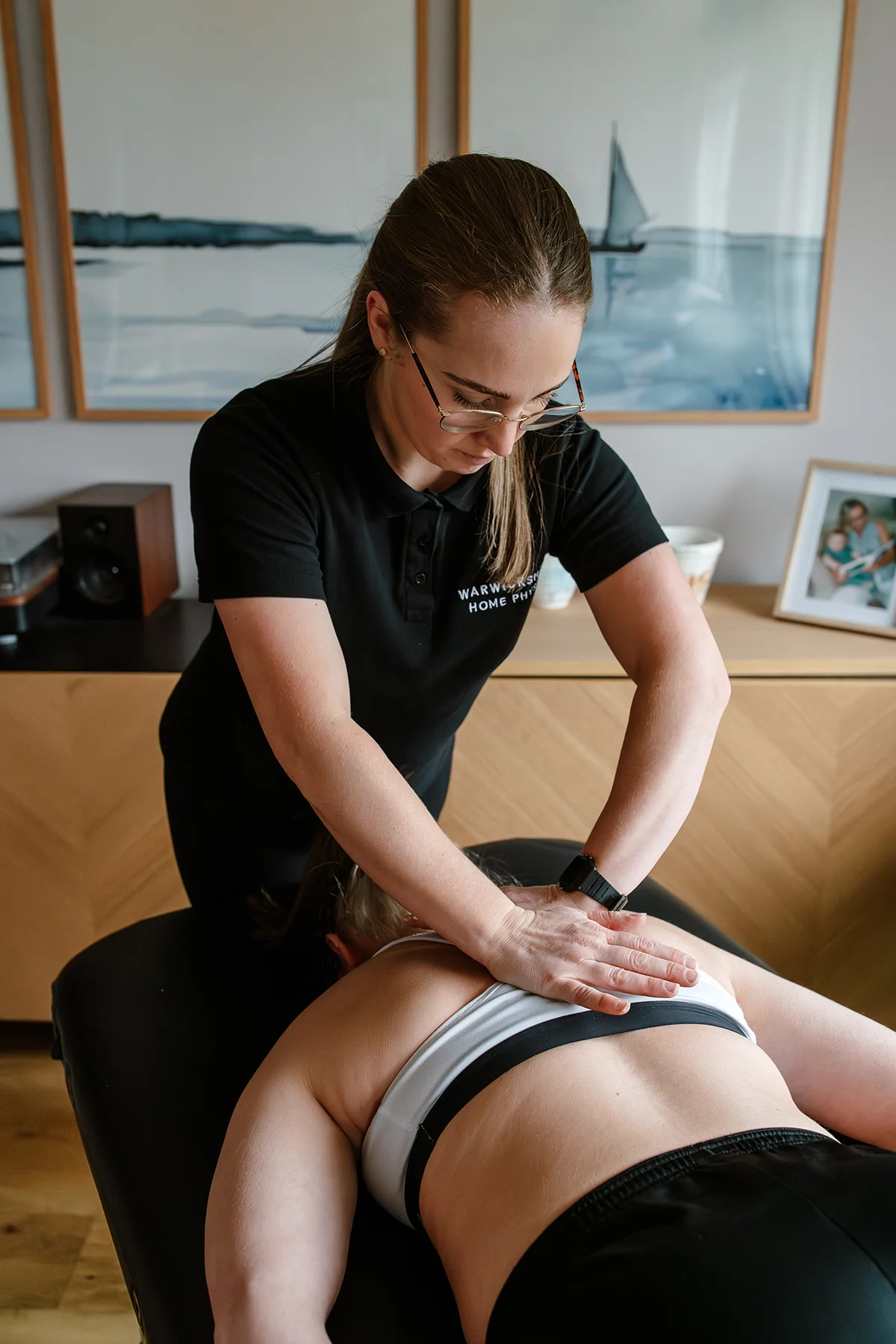
How Home Physiotherapy Helps Back Pain
Physiotherapy is recommended as a first-line treatment for most types of back pain, and the evidence consistently shows that staying active and following a guided exercise programme leads to better outcomes than rest alone. Our role is to take the guesswork out of recovery and give you a plan that fits your body, your home, and your goals.
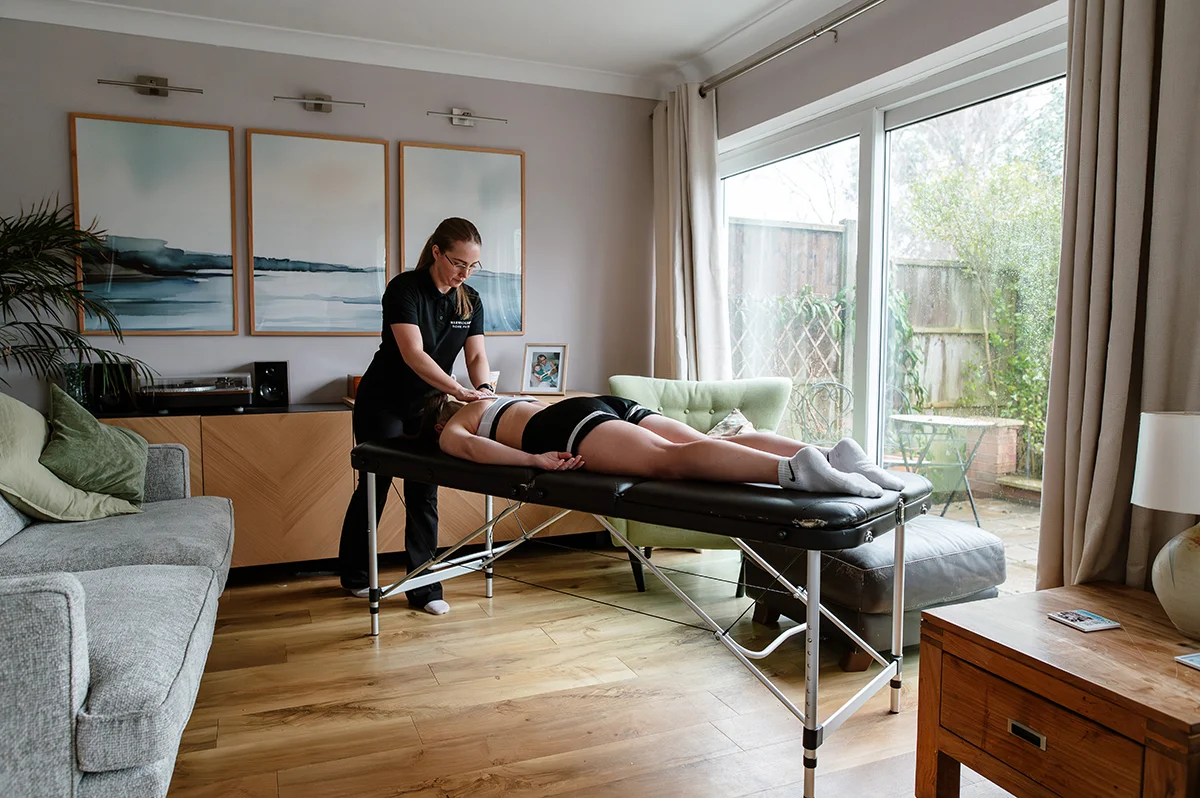
Treatment is delivered through our home physiotherapy service, which means we assess you in the environment where your symptoms actually happen. We can watch how you move around your own space, adapt exercises to the furniture and equipment you have, and make practical suggestions that are easy to stick to. Your programme may combine hands-on techniques to ease pain and stiffness with gentle, progressive exercise to rebuild strength and confidence in movement.
Where back pain is linked to a sporting activity or a return to exercise, we can draw on our sports rehabilitation expertise to guide you safely back to the things you love.
- Find out more about our home physiotherapy service
- Explore our sports injury rehab service for activity-related back pain

What to Expect From Your Assessment
Your first appointment is a relaxed, thorough conversation followed by a physical assessment. We will ask about how your pain started, what makes it better or worse, your general health, and what you are hoping to get back to. We then look at how your spine and surrounding joints move, test your strength, and rule out anything that needs onward referral.
We always take the time to discuss things and ensure you understand exactly what is going on, and agree a personalised treatment plan with you. You will usually leave your very first session with a clear understanding of your back pain and a few simple, tailored exercises to begin straight away. We believe recovery works best as a partnership, so you will always feel informed and involved.